|
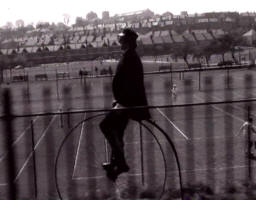
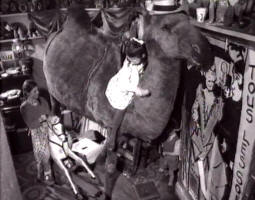
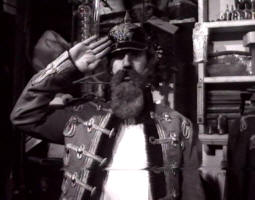
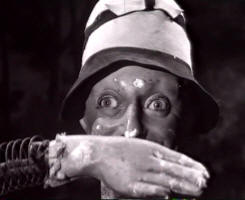
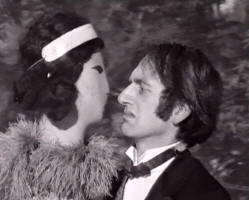
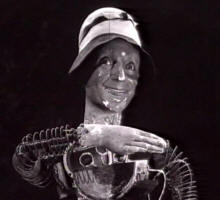
1962 Preservation Man Bruce Lacey seems to keep everything. The film starts with him riding a penny-farthing (and if you look closely you can just see the feet of schoolchildren chasing after him). He stops by crashing into a tree. Throughout the film he seem a mix between Buster Keaton and Groucho Marx and even his children are involved as they play on a giant stuffed camel in his house.
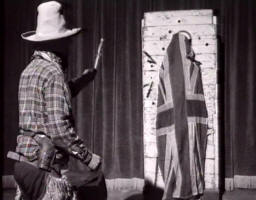
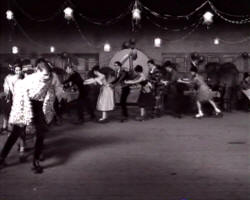
Lacey is not interesting enough for the film, he seems merely foolish. However the films does have some images that Ken would use later- the knife thrower comes back in Mahler, the chain of people on skates in French Dressing.
And the dummy coming to life (Lacey wearing what looks like the costume the Beatles would later use on Sgt Pepper) is a reminder of Ken as a young actor when he had to stay on stage inside a suit of armour the whole play, only coming alive for the climax.
"While making The Preservation Man, Russell got the better of Wheldon by producing a faked recording of Tennyson that he passed off as the real thing. The BBC archives have a wax cylinder recording of Tennyson reading The Charge of the Light Brigade, which Russell wanted to use with shots of Lacey's phonographs. But the voice is almost inaudible. Russell decided he could improve on this. One of Lacey's machines was an early office dictaphone, which recorded on wax cylinders. They stuffed a sock in the tube, to give a muffled sound, and Russell imitated the poet. 'Tennyson, eh?' Wheldon said when he heard it on the sound-track, 'Marvelous old chap'" (from Sir Huge by Paul Ferris, ch 7). 1962 Mr Chesher´s Traction Engines
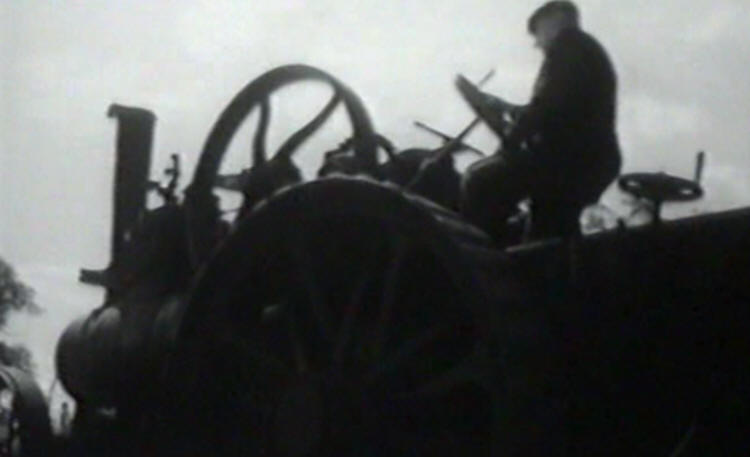
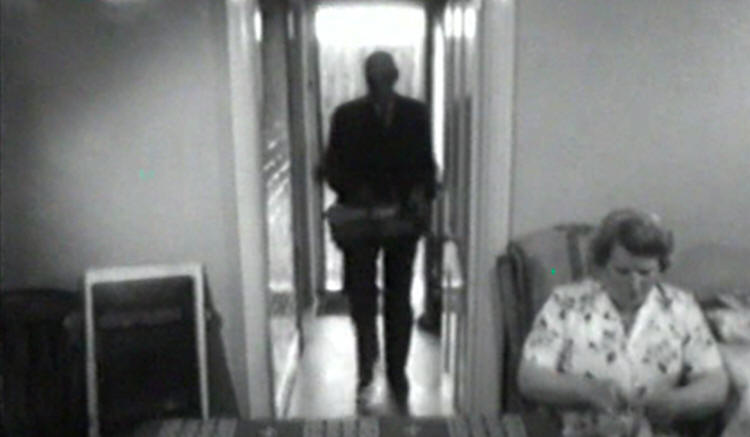
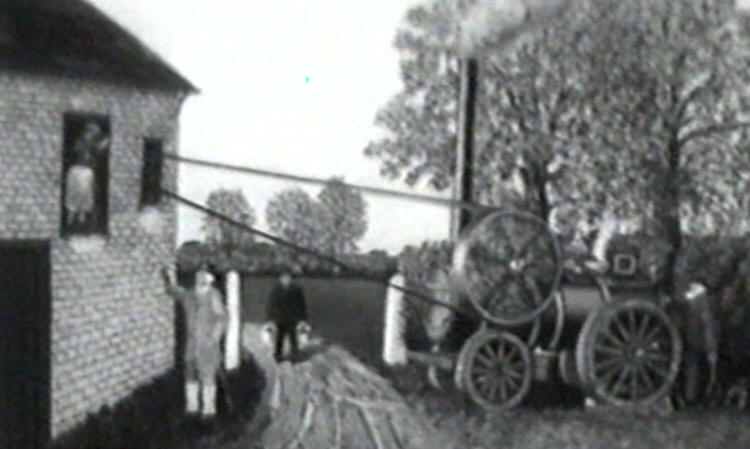
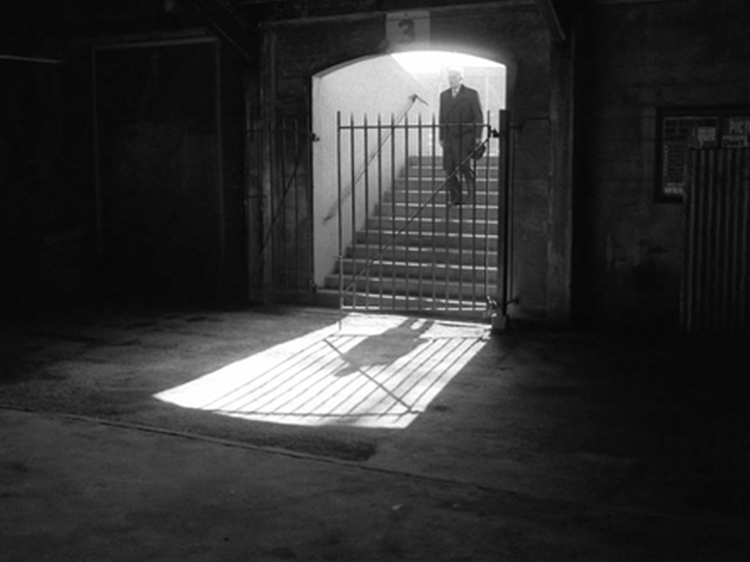
This 16 minute film starts with A.W. Chesher reflecting on the disappearance of English farmland, with some farms being turned into aerodromes. "Modern progress has brought us these changes and it's really no use worrying about them. One thing I do really regret is the passing of a stream tractor engine". These are similar to combinations of tractors and trains and do not need rails- Chesher talks of the problems they had getting stuck on cobble stones. He says "they travelled at quite a speed- 20 mph". Some early trademark shots by Ken- the silhouette in a doorway and multiple images with mirrors.
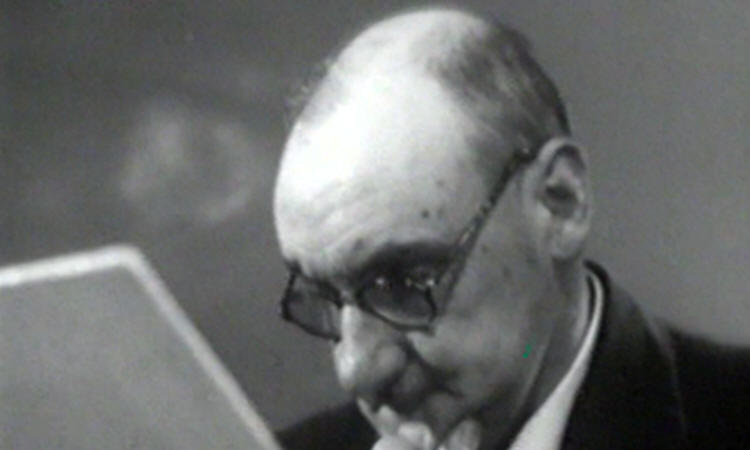
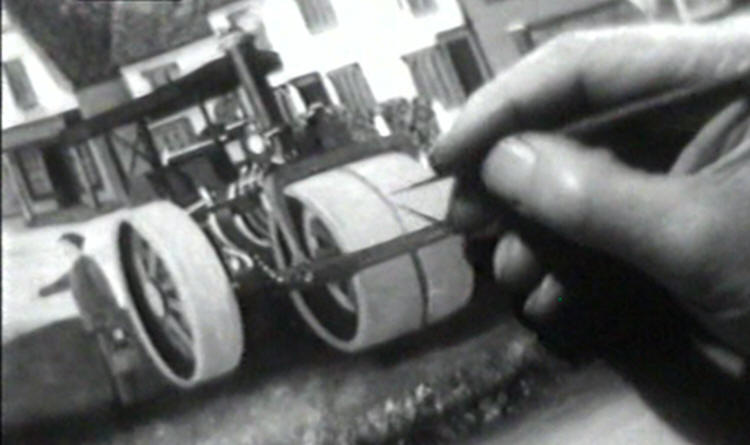
The films moves to Chesher who collects traction engines, and then we discover he does paintings of the engines. He seems to know everything about the machines, and though he talks of technical details, his hypnotic voice makes it seem like poetry.
"I use very small brushes. I don't worry much about lights and shades. My object is to paint a clear and distinct picture of the machines I am portraying".
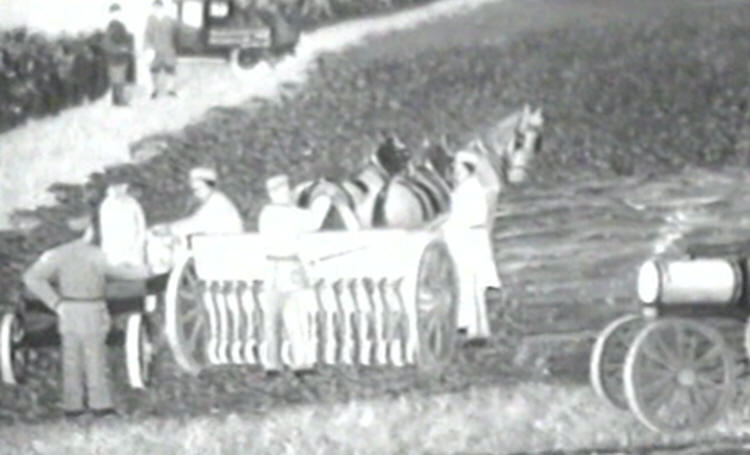
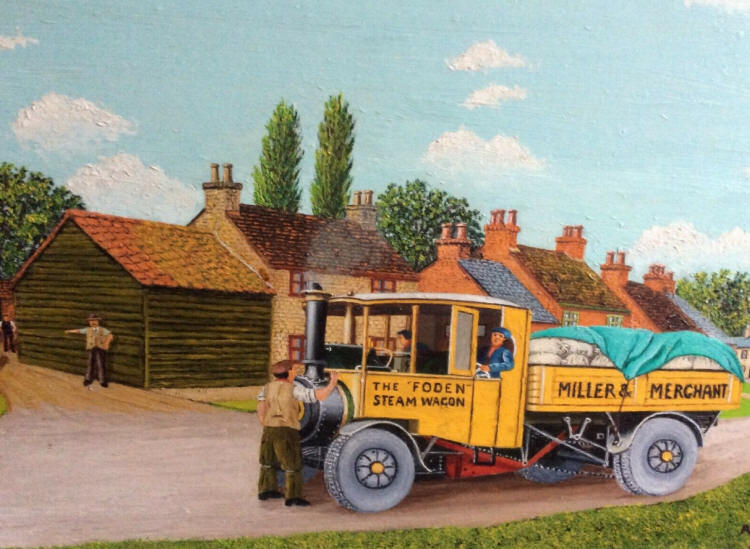
His painting style has some traces of Lowry and Stanley Spenser. A large part of Ken's film consists of showing the paintings with a voiceover by Chesher.
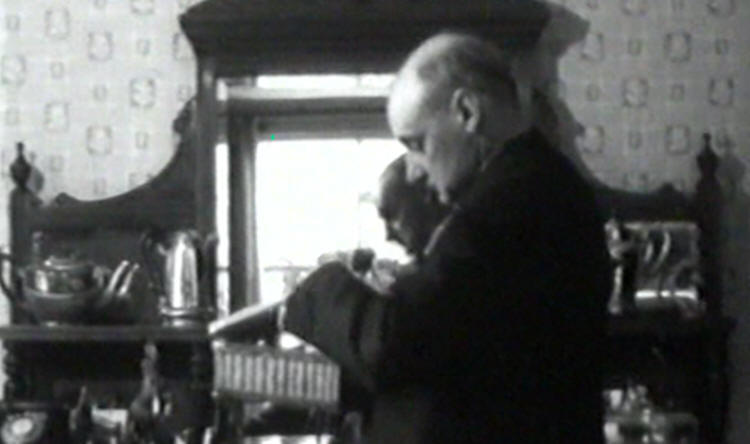
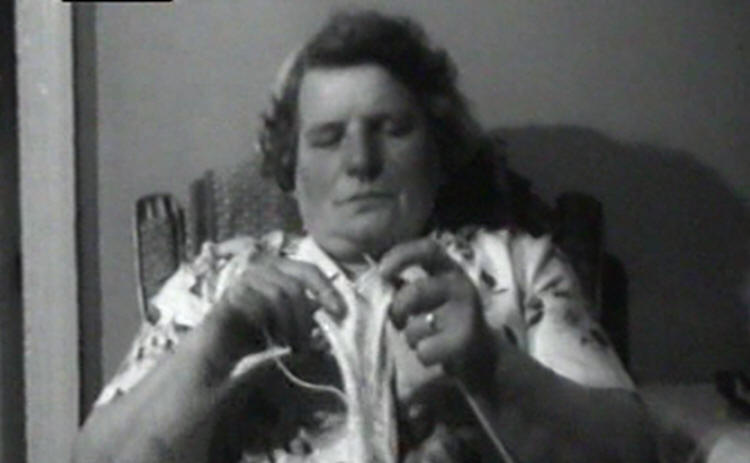
He paints in his house on a small table, with his wife beside him. She shows no emotion and knits continually "My wife will do some knitting which keeps her quiet".
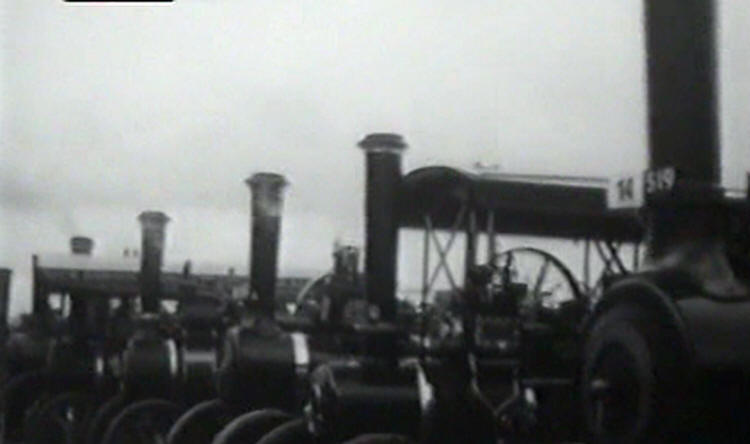
He has to put a sheet over the table to avoid paint spilling- obviously something his wife insisted on. And he draws his engines in country scenes, good primitive paintings. Russell ends by filming a traction engine show with the machines moving to Elgar's Pomp and Circumstance- Ken was obviously thinking of his next film- Elgar.
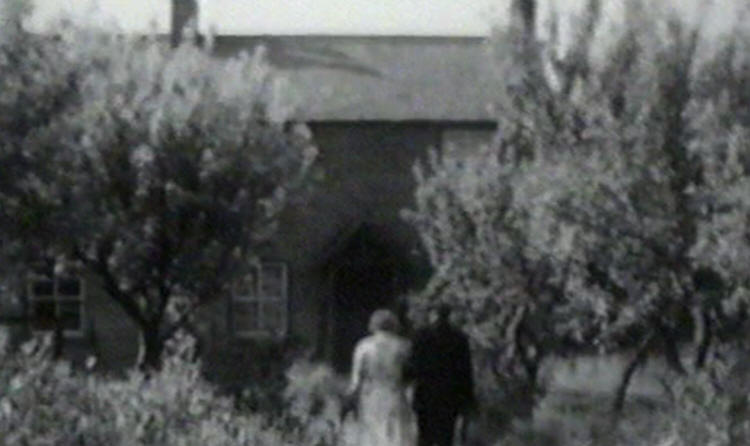
As a coda Chesher reveals his "house is coming down in September to make way for a new road".
He is not mentioned in art books and neither the Tate nor the National Gallery have his work. His works are however regularly up for sale at prices up to £400. The film suffers from being in black and white- compare with a colour image.
"A self-taught naïve painter and farmer in Bedfordshire. Following two serious accidents he began painting as a form of convalescence. Painted seventy paintings on the various uses of traction engines. 1960 - had exhibition at Arthur Jeffress Gallery London." (from Science Museum Group click here). B&W images from the programme.
"There are images that stick in your brain
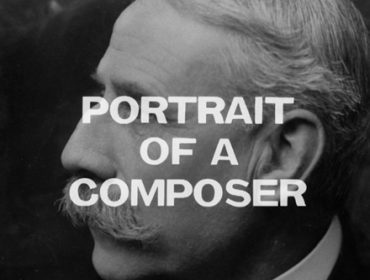
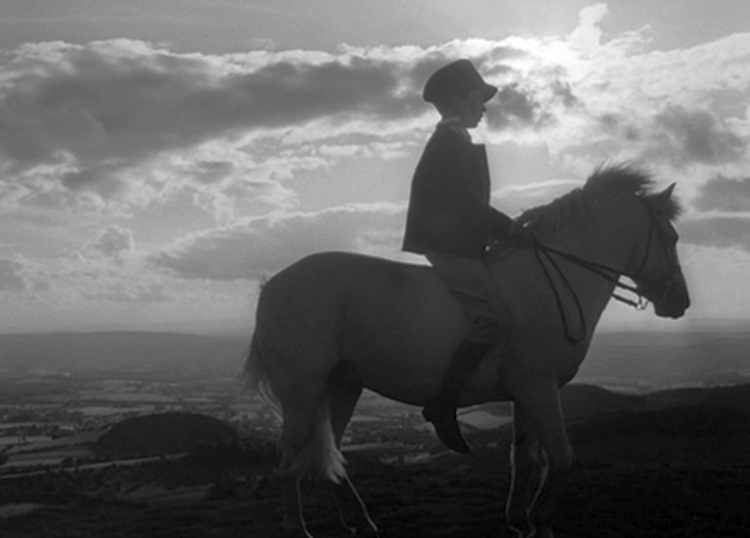
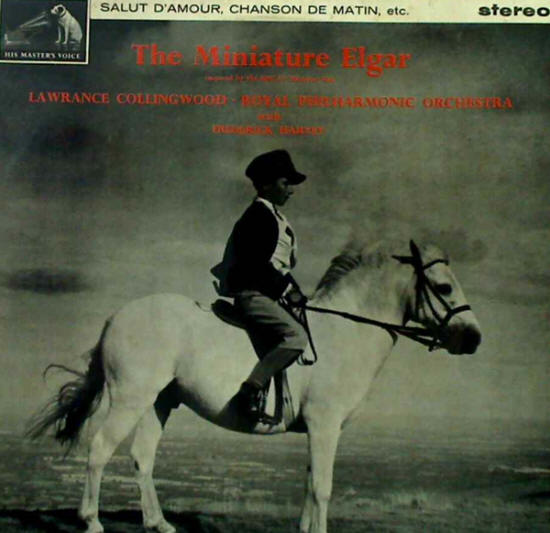
forever" Alan Parker Elgar: Portrait of a Composer from 1962. For the 100th edition of Monitor something special was required. Russell came up with the documentary about the composer Elgar which became the most loved television programme in the 1960s. "A straightforward documentary approach was abandoned, in favour of what is now known as docu-drama, with actors taking the parts of Elgar and his family. However, there was no dialogue and only a dry commentary from Huw Wheldon. Instead Russell filled the soundtrack with Elgar's music and created a serious yet expressive film that has become a classic of its type... Russell died in 2011, but today it is standard practice for documentaries to contain the dramatizations of the sort that he pioneered". (History of the BBC, from BBC website here). The film has three segments, the boy Elgar learning music without tuition, the young Elgar struggling to survive, and the feted Sir Edward Elgar. Not only did it establish Russell as a film-maker - it led to him directing his first cinema film French Dressing - but it also started a revival of Elgar, from being totally neglected and regarded as out-of-date (similar to Kipling now) to one of the best loved English composers. Opening with the boy Elgar riding a white horse over the Malvern Hills, the film couldn't fail to win the audience over. In one scene Elgar is shown flying a kite, Ken had to prove it really happened before it was included (from Sir Huge by Paul Ferris, ch 8).
The conventional documentary style (talking heads and empty buildings) is abandoned for a film which gives a feeling for Elgar and how he lived and why he composed. Using three actors to play Elgar at various ages was controversial within the BBC- it was felt actors should not appear in documentaries. For Elgar they were not allowed to speak in the film.
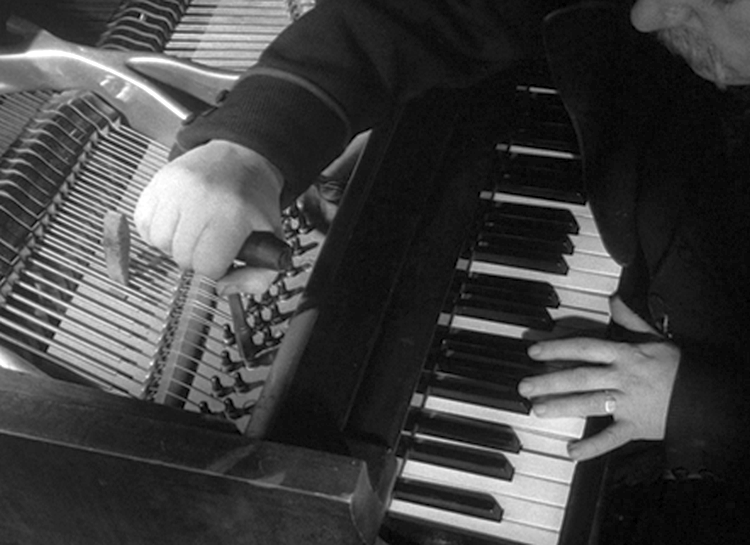
Elgar's father was a piano tuner, but too poor to pay for tuition for the young Elgar.
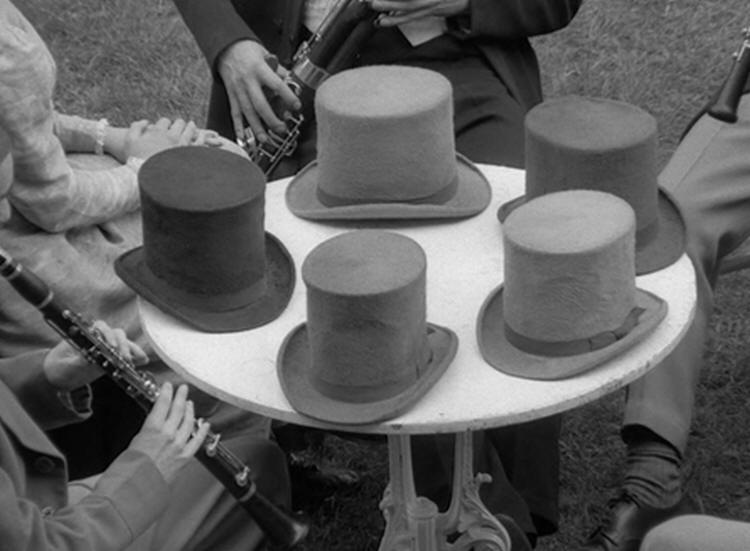
The quintet playing Elgar.
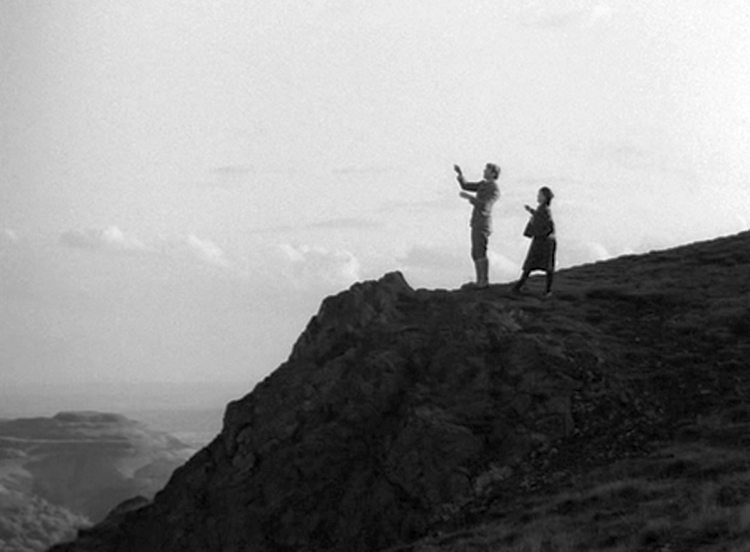
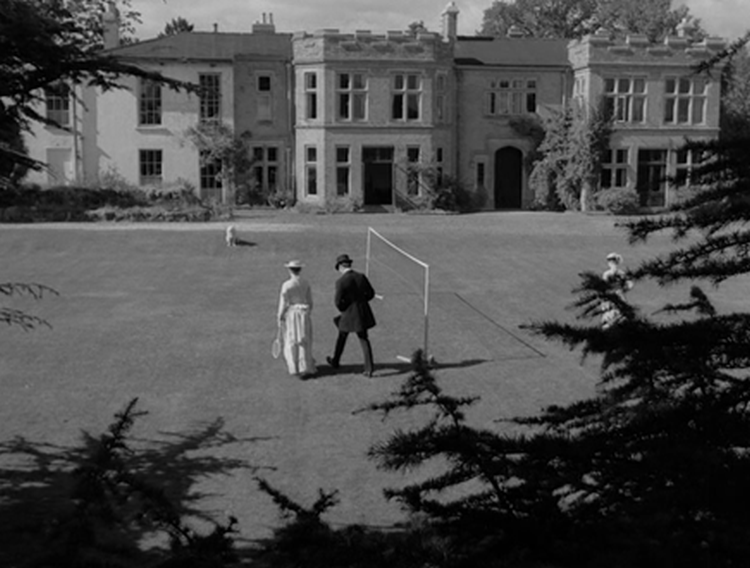
Because actors were not allowed to talk, the courtship of his future wife has to be filmed from a distance.
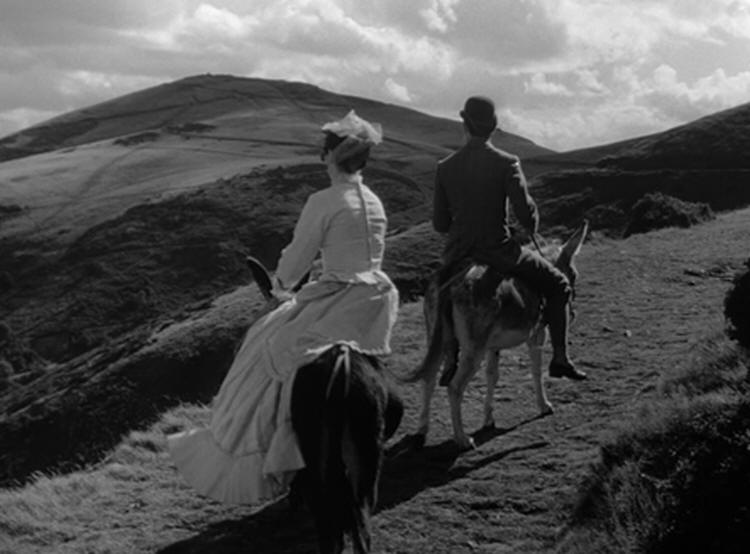
Anything closer between the couple was filmed from behind. All restrictions imposed on Russell, but he still comes up with intimacy- both on donkeys on the hills he rode as a child- and beautiful imagery.
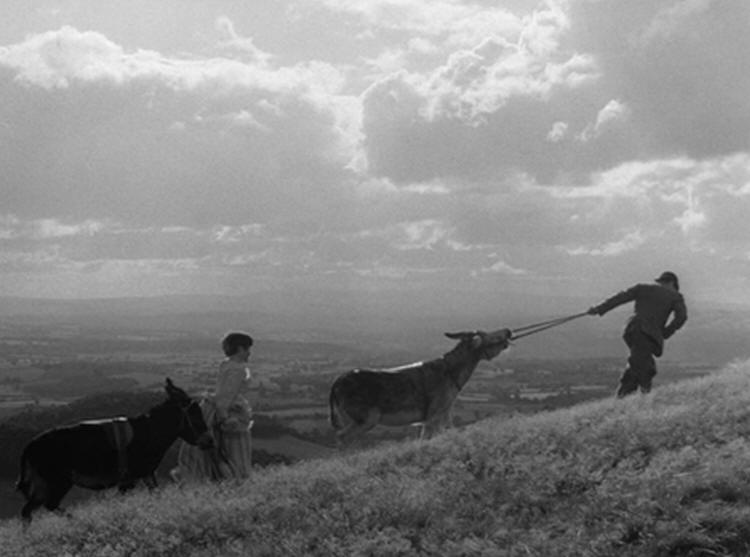
I guess the donkey was not meant to be so difficult, but turning a problem to your advantage makes great filming.
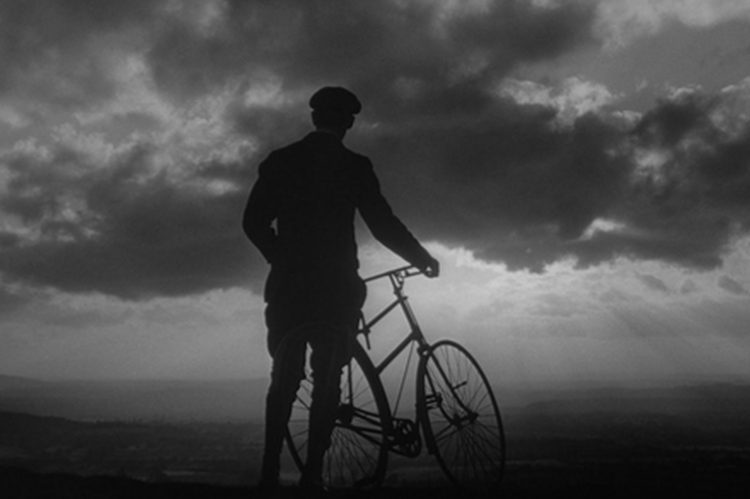
The iconic image but now with a bicycle. As Elgar goes through life he will use donkeys, a bike and a car to ride the hills.
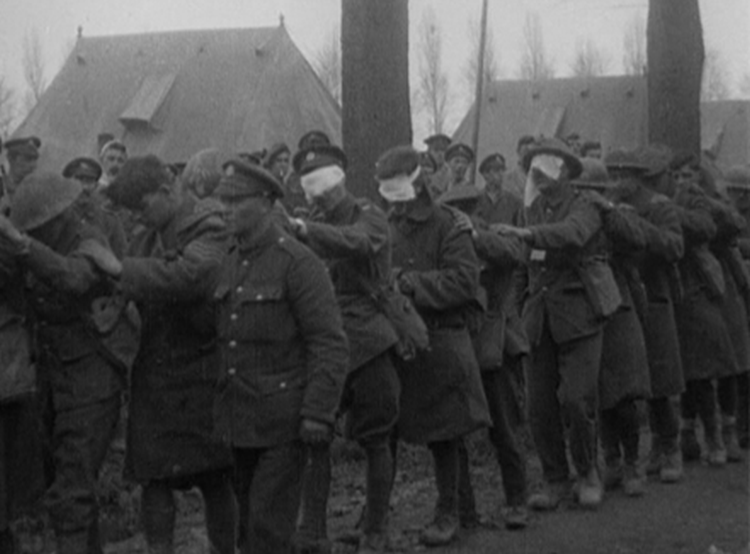
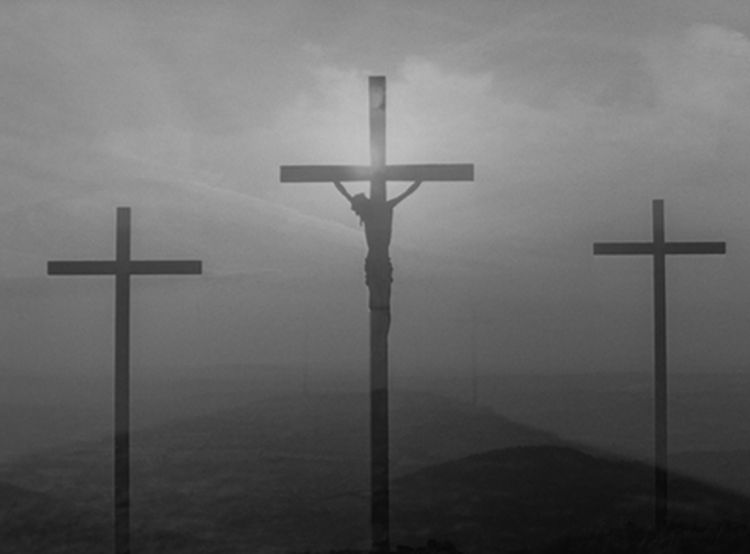
Controversially Russell played the patriotic Land of Hope and Glory to scenes of First World War carnage as the blind lead the blind. Despite this the film was one of the BBC's more popular films, and regularly repeated. "... we are exposed to contrapuntal images of blinded World War One mustard gas victims followed by accumulating shots of graves that undermine the jingoistic connotations that have been heaped onto the 'Land of Hope and Glory tune'. These techniques recall the work of Sergei Eisenstein, a thinker and film practitioner whose ideas have much to offer in the analysis of Russell's films and the critical tirades that plague them" (Kay Dickinson, Off Key, 2008, chapter 3).
The Catholicism of Elgar and Russell comes over. "I think being a Catholic myself has definitely given me an empathy with Elgar's music. Even when he stopped writing those religious cantatas, that doesn't mean to say religion wasn't in his music. I certainly think it's there in the Second Symphony... when I first took the idea of doing a film on Elgar. Huw [Wheldon] say 'Hmmm, well cradle to the grave, rags to riches. Yes, where's the man's backbone?' And I said, 'Well the backbone is the Malvern Hills. And it's in his music.' And Huw said, 'That's the theme, Russell, the hills" (BBC Music, June 2007).
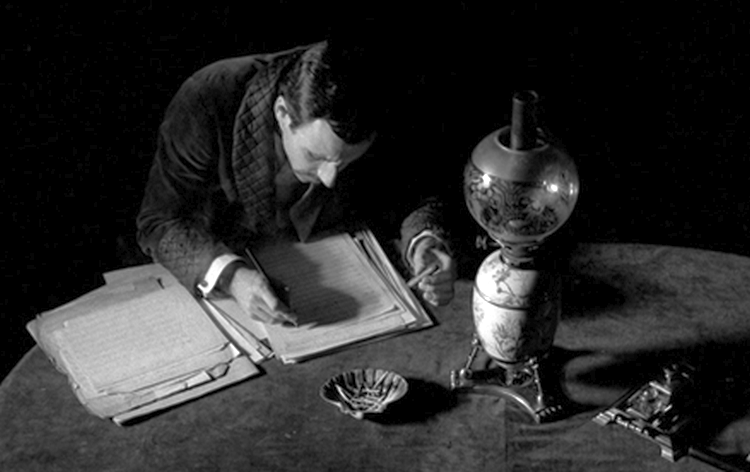
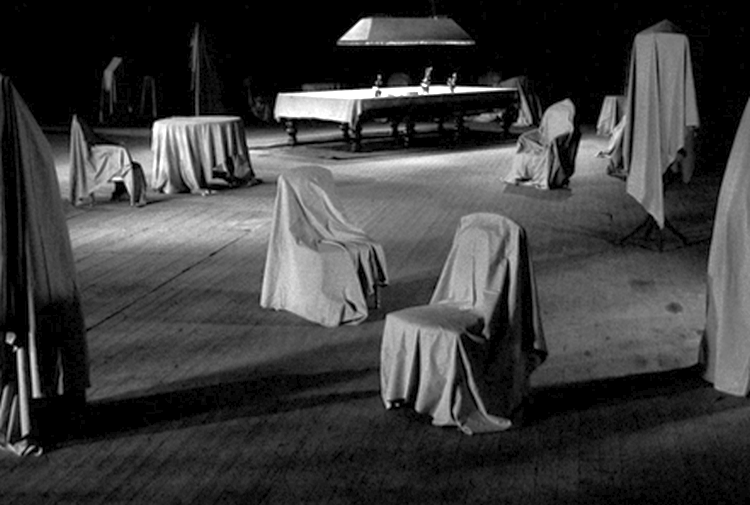
After his wife died Elgar closed down part of the house. Ken Russell would use the imagery of the drapes later in The Lair of the White Worm.
The film led to a revival of Elgar's works and the covers of LPs would often use the imagery of Elgar and his horse and the Malvern Hills. "Although Elgar had perhaps seemed a dusty anachronism to many in the midcentury, Russell's film breathed new life into his oeuvre" (Kay Dickinson, Off Key, 2008, chapter 1). One of the landmarks of television (Russell's Song of Summer is another) alongside Ken Loach (Cathy Come Home). Russell later tried to raise finance for an Elgar film but didn't succeed. 40 years on he made a new Elgar film for Melvyn Bragg. The music includes:
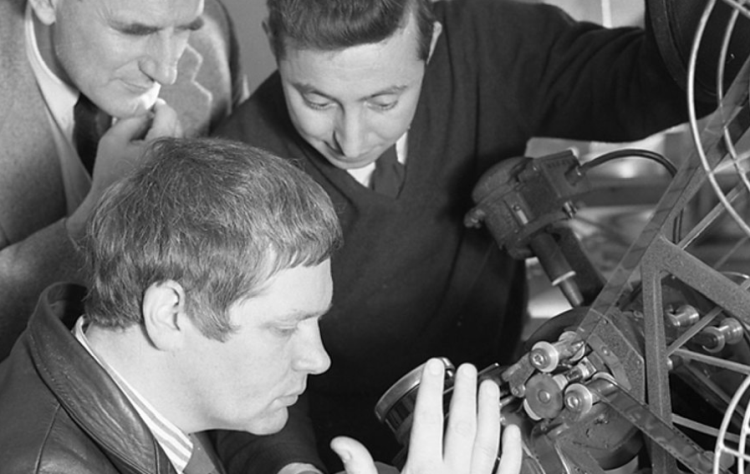
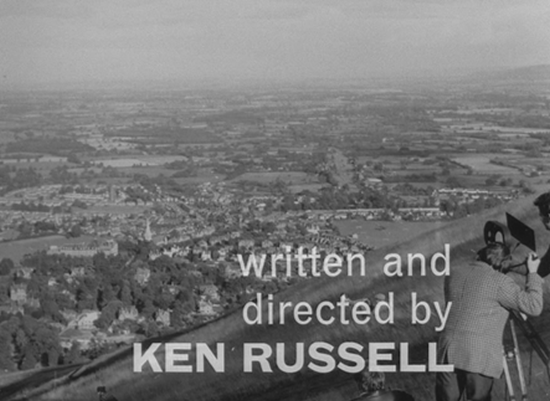
Russell at front, Huw Wheldon above left (from tribute film Imagine, on BBC website History of the BBC, Monitor - Elgar by Ken Russell here). The boy Elgar is not credited but Ken says he was a local boy, the young Elgar was played by Peter Brett (a friend) and the elderly Elgar by George McGrath (from dvd commentary). Peter Brett would later write the screenplay for Ken's French Dressing. The editor is Alan Tyrer and sound is by Russell regular John Murphy. The script is by Russell, with Huw Wheldon writing and speaking the commentary. Ken Higgins is the photographer, his talent and Russell's imagery is stunning. Ken says filming took three weeks or less, in the Malvern Hills and occasionally in London. The crew consisted of Ken, the production assistant, the cameraman and an assistant. As there was no dialogue there was no sound man (from DVD commentary).
"Most television dates rapidly, but over forty years on [now more than 60], Elgar is still startlingly fresh and inventive. Even the black-and-white photography looks like a deliberate artistic choice as opposed to a then-universal convention" (Michael Brooke, British Film Institute BFI ScreenOnline, here). All images from the film as well as the LP cover. |