|
Clouds of Glory and other commissions
A wide range of documentaries by Russell. The
commissions by Melvyn Bragg, dramatised documentaries, are especially
interesting recreating to an extent some of the Monitor days (Wynn Wheldon, the
son of Monitor's Huw Wheldon disagrees) but this time for commercial TV.
The two Clouds of Glory films are about the
Romantic poets William Wordsworth and Samuel Taylor Coleridge. There was to be a third film, King of the
Crocodiles, about the poet Southey but it was never made
because of budget problems. The other non-dramatised
documentaries are more forced, though some are worth watching. These commissions
helped Russell survive as he sought financing for full length films.
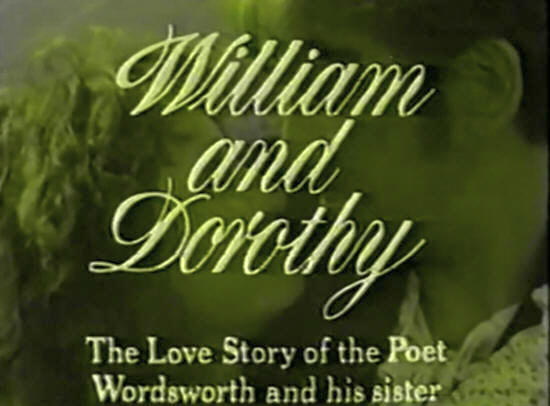
William and Dorothy: The Love Story of the Poet Wordsworth and his Sister,
from 1976, part of Clouds of Glory. Melvyn Bragg, the television arts presenter, has often
commissioned Russell to produce television documentaries. Bragg co-wrote with Russell.
Clouds of Glory were a pair of films, the first on the relationship of the poet Wordsworth and his sister
which Russell-Bragg suggested was incestuous but unconsummated.
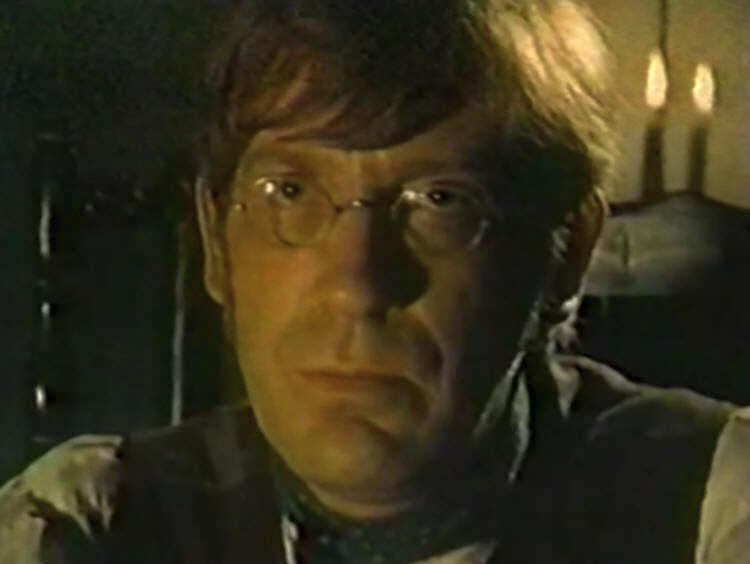
"William Wordsworth 1770-1850...In that summer [1797] the Wordsworths
[William and sister Dorothy] moved to Alfoxden in north Somerset close to
Nether Stowey where Coleridge lived,,, now they could meet and converse
daily... William's marriage to Mary Hutchison... took place in 1802. Mary
was an entirely suitable wife for Wordsworth, her repose balancing
Dorothy's impulsiveness and enthusiasms. She was not his first love.
During the heady youthful days in France William had loved Annette Vallon,
who had borne him a daughter, but that liaison left no mark on him or his
work"
and on his poetry
"He discloses what we have often felt but could not
express, and our knowledge of sensation is greatly enlarged, When he
examines human feeling he applies the same skill, achieving a remarkable
expression of emotions that often lie submerged" (from The Cambridge
Companion to English Literature, Michael Stapleton).
Louisa
I met Louisa in the shade,
And, having seen that lovely Maid,
Why should I fear to say
That, nymph-like, she is fleet and strong.
And down the rocks can leap along
Like rivulets in May?
And she hath smiles to earth unknown;
Smiles, that with motion of their own
Do spread, and sink, and rise;
That come and go with endless play,
And ever, as they pass away,
Are hidden in her eyes.
She loves her fire, her cottage-home;
Yet o'er the moorland will she roam
In weather rough and bleak;
And, when against the wind she strains,
Oh! might I kiss the mountain rains
That sparkle on her cheek.
Take all that's mine "beneath the moon,'
If I with her but half a noon
May sit beneath the walls
Of some old cave, or mossy nook,
When up she winds along the brook
To hunt the waterfalls.
William Wordsworth |
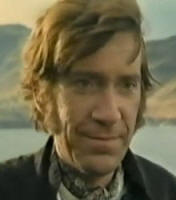
The film starts with William (David Warner) comforting his sister
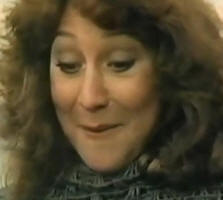
Dorothy (Felicity Kendal) on her deathbed "“If she was to depart my
life would be robbed of a light to a degree I have not the courage to
think of” and continues with flashbacks with the poetry of Wordsworth
linked to his life and Dorothy's relationship.
Dorothy remembers when the two of them came across a sparrows nest
when they were children- in the poem Emmeline is Dorothy "She
gave me eyes, she gave me ears / And humble cares, and delicate fears/
The heart, the fountain of sweet tears/ And love, and hope, and joy".
The Sparrow's Nest
Behold, within the leafy shade,
Those bright blue eggs together laid!
On me the
chance-discovered sight
Gleamed like a vision of delight.
I
started- seeming to espy
The home and sheltered bed,
The
Sparrow's dwelling, which, hard by
My Father' house, in wet or
dry
My sister Emmeline and I
Together visited.
She looked
at it and seemed to fear it;
Dreading, tho' wishing, to be near
it:
Such heart was in her, being then
A little Prattler
among men.
The Blessing of my later year
Was with me when a
boy:
She gave me eyes, she gave me ears;
And humble cares,
and delicate fears;
The heart, the fountain of sweet tears;
And love, and hope, and joy.
William Wordsworth |
More memories of childhood from his famous long poem The Prelude "unreproved
enchantment led us on by rocks and pools shut out from every star".
from The Prelude: Childhood and School-Time
...
We were a noisy crew; the sun in heaven
Beheld not vales more beautiful than ours;
Nor saw a band in happiness and joy
Richer, or worthier of the ground they trod.
I could record with no reluctant voice
The woods of autumn and their hazel bowers
With milk-white clusters hung; the rod and line,
True symbol of hope's foolishness, whose strong
And unreproved enchantment led us on
By rocks and pools shut out from every star,
All the green summer, to forlorn cascades
Among the windings of the mountain brooks.
Unfading recollections
...
Fair seed-time had my soul, and I grew up
Fostered alike by beauty and by fear:
...
For that time
While on the perilous ridge I hung alone,
With what strange utterance did the loud dry wind
Blow through my ear! the sky seemed not a sky
Of earth- and with what motion moved the clouds!
...
Thus while the days flew by, and years passed on,
From Nature and her overflowing soul,
I had received so much, that all my thoughts
Were steeped in feeling; I was only then
Contented, when with bliss ineffable
I felt the sentiment of Being spread
O'er all that moves and all that seemeth still;
O'er all that
...
O'er all that leaps and runs, and shouts and sings,
Or beats the gladsome air; o'er all that glides
Beneath the wave, yea, in the wave itself,
And mighty depths of waters.
Wonder not If such
my transports were,
for in all things I saw one line and
felt that it was joy
William Wordsworth
|
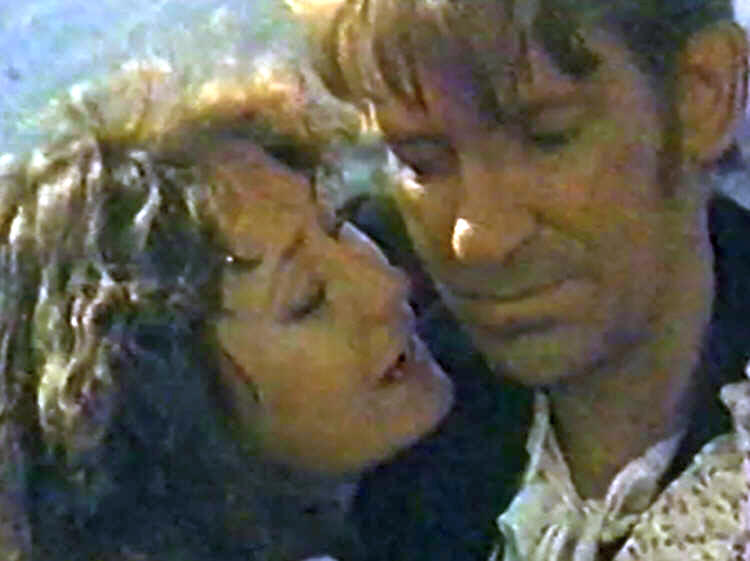
Dorothy says she is in all his poetry - you’ve put all my life into your
poetry”. They embrace as lovers.
The French Revolution is underway and Wordsworth wants to be
part of what he sees as a new future “the old order must be pulled down,
we must follow France, and then this place will be fit for poets. France
is showing us the way".
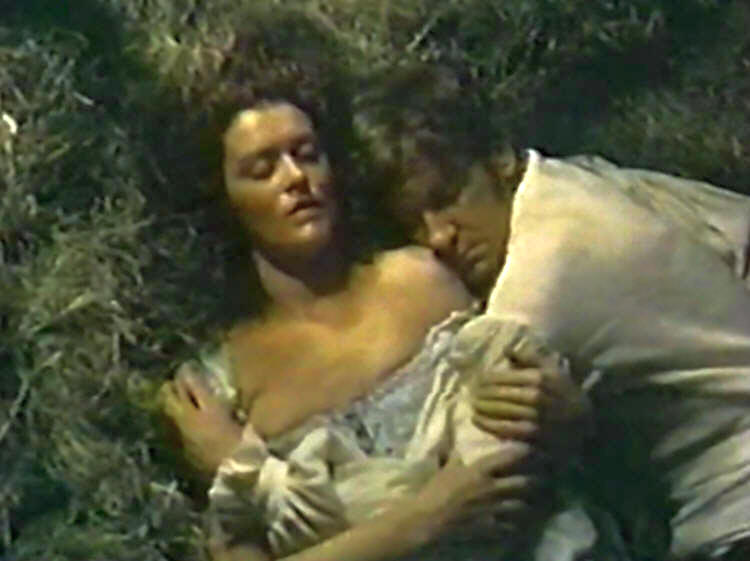
In France he falls in love with Annette Vallon (Patricia Quinn)
who has his child, but then war separates them forever and he is
back with Dorothy in the Lake District.
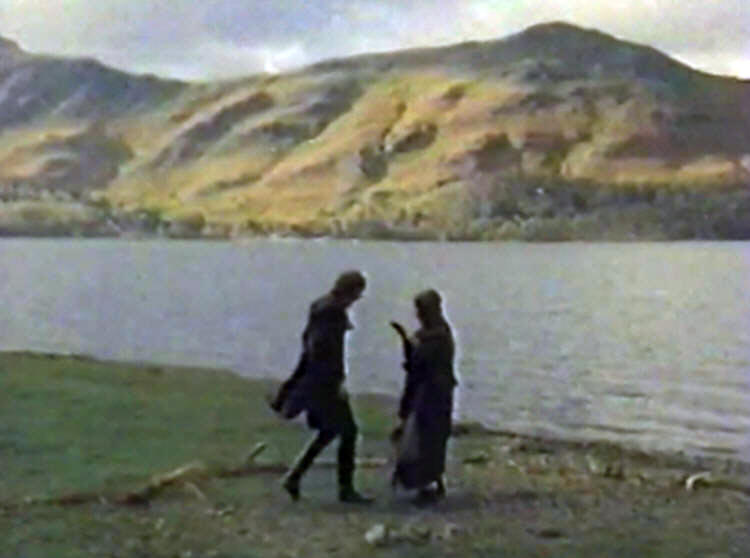
from I Travelled among Unknown Men
I travelled
among unknown men,
In lands beyond the sea;
Nor, England!
did I know till then
What love I bore to thee.
'Tis
past, that melancholy dream!
Nor will I quit thy shore
A
second time; for still I seem
To love thee more and more.
Among thy mountains did I feel
The joy of my desire;
And
she I cherished turned her wheel
Beside an English fire
…
William Wordsworth |
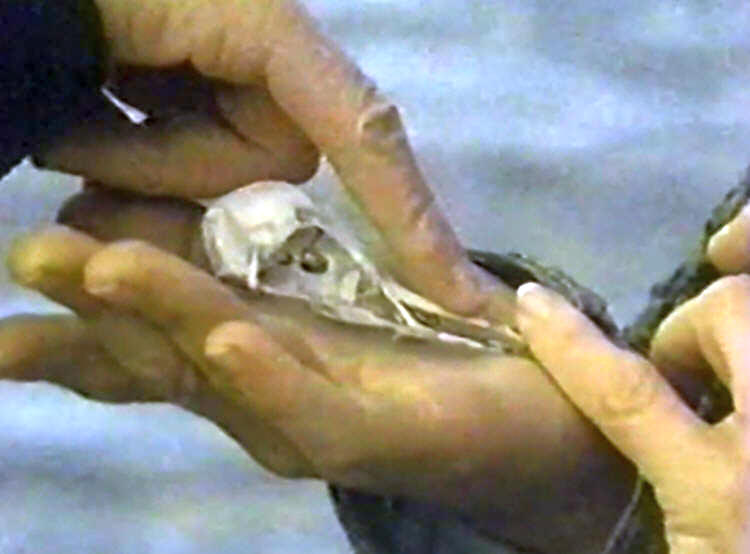
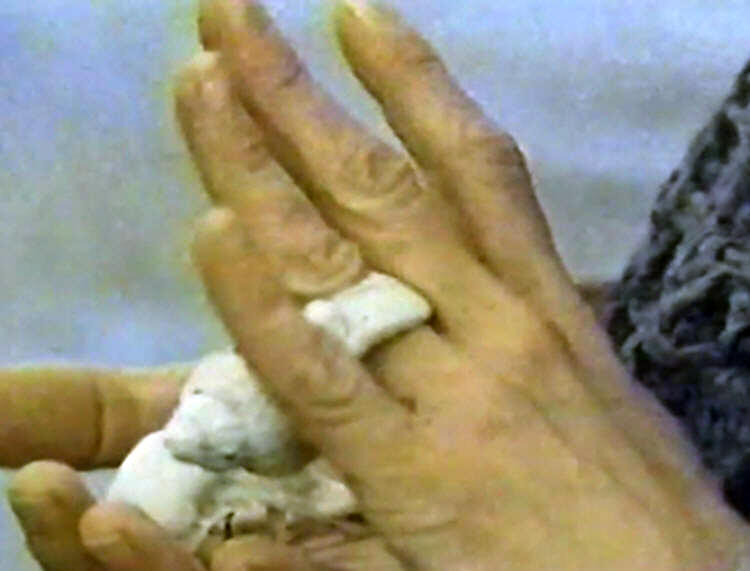
The best scene is when Dorothy places a shell on her finger as if it is a
wedding ring, and shows it to her brother who can never
marry her. The relationship between the two is like a
more restrained version of the relationship in Savage Messiah.
They have an idyllic time in the countryside.
from
I wandered lonely as a cloud
I wandered lonely as a cloud
That floats on high o'er vales and hills,
When all at once I saw a crowd,
A host, of golden daffodils;
Beside the lake, beneath the trees,
Fluttering and dancing in the breeze.
….
William Wordsworth
|
Dorothy remembers the day "When we were in the woods beyond Gowbarrow
Park, we saw a few daffodils close to the water side. We fancied that the
lake had floated the seed ashore and that the little colony had so sprung
up. But as we went along there were more and yet more and at last under
the boughs of the trees, we saw daffodils so beautiful. They grew among
the mossy stones about and about them, some rested their heads upon these
stones as on a pillow for weariness and the rest tossed and reeled and
danced and seemed as if they verily laughed with the wind that blew upon
them over the lake, they looked so gay ever dancing ever changing"
(Dorothy Wordsworth, The Grasmere Journal , 15 Apr 1802).
To A Butterfly
Oh! pleasant, pleasant were the days,
The time, when, in our childish plays,
My sister Emmeline and I
Together chased the butterfly!
A very hunter did I rush
Upon the prey: - with leaps and springs
I followed on from brake to bush;
But she, God love her, feared to brush
The dust from off its wings.
William Wordsworth |
from
To My Sister
…Then come, my Sister! come, I pray,
With speed put on your woodland dress;
And bring no book: for this one day
We’ll give to idleness.
William Wordsworth |
However it will not last.
from Tintern Abbey
…
That time is past,
And all its aching joys are now no more,
And all its dizzy raptures. Not for this
Faint I, nor mourn nor murmur; other gifts
Have followed; for such loss, I would believe,
Abundant recompense. For I have learned
To look on nature, not as in the hour
Of thoughtless youth; but hearing oftentimes
The still sad music of humanity,
Nor harsh nor grating, though of ample power
To chasten and subdue.—And I have felt
A presence that disturbs me with the joy
Of elevated thoughts; a sense sublime
Of something far more deeply interfused,
Whose dwelling is the light of setting suns,
And the round ocean and the living air,
And the blue sky, and in the mind of man:
A motion and a spirit, that impels
All thinking things, all objects of all thought,
And rolls through all things.
William Wordsworth |
Wordsworth marries Mary Hutchison (Sally Sheridan) and leaves their
cottage.
from
A Farewell
Farewell, thou little Nook of mountain-ground,
Thou rocky corner in the lowest stair
Of that magnificent temple which doth bound
One side of our whole vale with grandeur rare;
Sweet garden-orchard, eminently fair,
The loveliest spot that man hath ever found,
Farewell!- we leave thee to Heaven's peaceful care,
Thee, and the Cottage which thou dost surround.
…
And there will safely ride when we are gone;
The flowering shrubs that deck our humble door
Will prosper, though untended and alone:
Fields, goods, and far-off chattels we have none:
These narrow bounds contain our private store
Of things earth makes, and sun doth shine upon;
Here are they in our sight- we have no more.
…
Dear Spot! which we have watched with tender heed,
Bringing thee chosen plants and blossoms blown
Among the distant mountains, flower and weed,
Which thou hast taken to thee as thy own,
Making all kindness registered and known;
Thou for our sakes, though Nature's child indeed,
Fair in thyself and beautiful alone,
Hast taken gifts which thou dost little need.
(verses shifted)
We go for One to whom ye will be dear;
And she will prize this Bower, this Indian shed,
Our own contrivance, Building without peer!
--A gentle Maid, whose heart is lowly bred,
Whose pleasures are in wild fields gatherèd,
With joyousness, and with a thoughtful cheer,
Will come to you; to you herself will wed;
And love the blessed life that we lead here.
…
O happy Garden! whose seclusion deep
Hath been so friendly to industrious hours;
And to soft slumbers, that did gently steep
Our spirits, carrying with them dreams of flowers,
And wild notes warbled among leafy bowers;
Two burning months let summer overleap,
And, coming back with Her who will be ours,
Into thy bosom we again shall creep.
William Wordsworth |
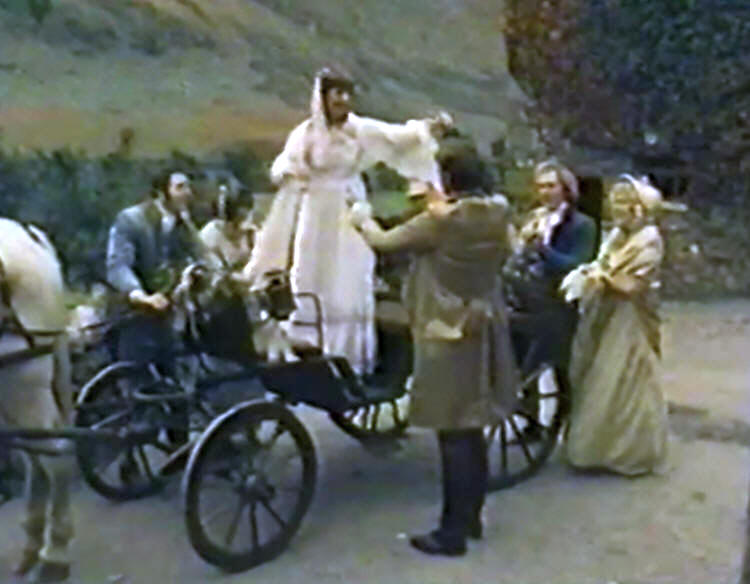
Wordsworth's new bride arrives...
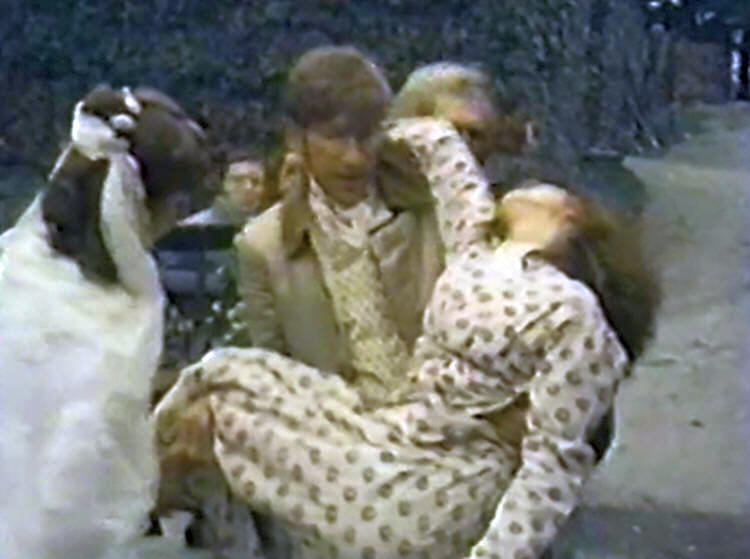
... as Dorothy faints, and Wordsworth ends up carrying her through the
threshold rather than his bride.
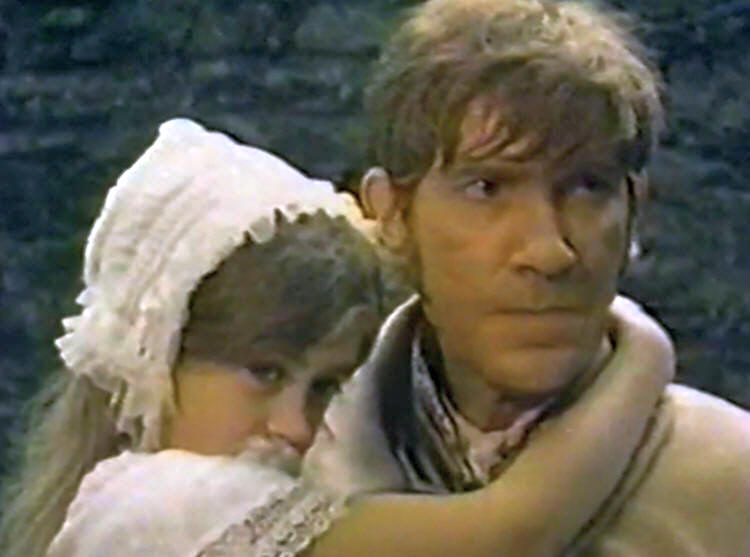
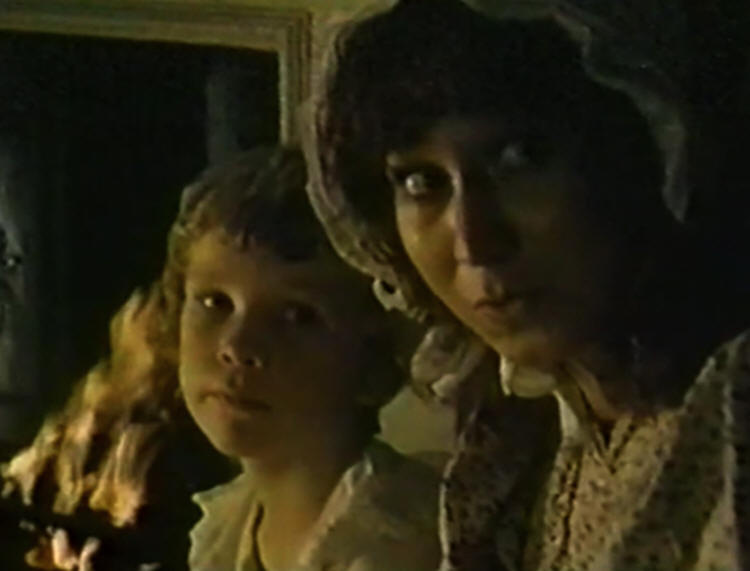
A new life with a wife and children, and Dorothy who reads to the children.
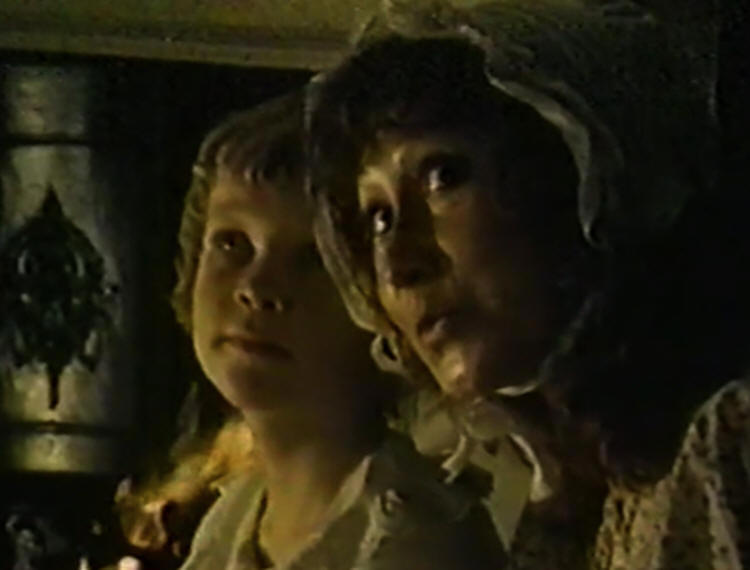
from
Address to A Child During A Boisterous Winter Evening
What way does the wind come? What way does he go?
He rides over the water, and over the snow,
Through wood, and through vale; and o’er rocky height,
Which the goat cannot climb, takes his sounding flight;
He tosses about in every bare tree,
As, if you look up, you plainly may see;
But how he will come, and whither he goes,
There’s never a scholar in England knows.
…
Hark! over the roof he makes a pause,
And growls as if he would fix his claws
Right in the slates, and with a huge rattle
Drive them down, like men in a battle:
- But let him range round; he does us no harm,
We build up the fire, we’re snug and warm;
Untouched by his breath see the candle shines bright,
And burns with a clear and steady light.
Books have we to read, but that half-stifled knell,
Alas! ’tis the sound of the eight o’clock bell.
- Come, now we’ll to bed! and when we are there
He may work his own will, and what shall we care?
He may knock at the door - we’ll not let him in;
He may drive at the windows - we’ll laugh at his din;
Let him seek his own home wherever it be;
Here’s cozie warm house for Edward and me
…
Dorothy Wordsworth
|
|
The Wind
What way does the wind come? What way does he go?
He
rides over the water, and over the snow,
Through wood and through vale:
and o'er rocky height
Which goat cannot climb, takes his sounding
flight.
He tosses about in every bare tree,
As, if you look up, you
plainly may see;
But how he will come, and wither he goes,
There's
never a scholar in England knows.
Dorothy Wordsworth
|
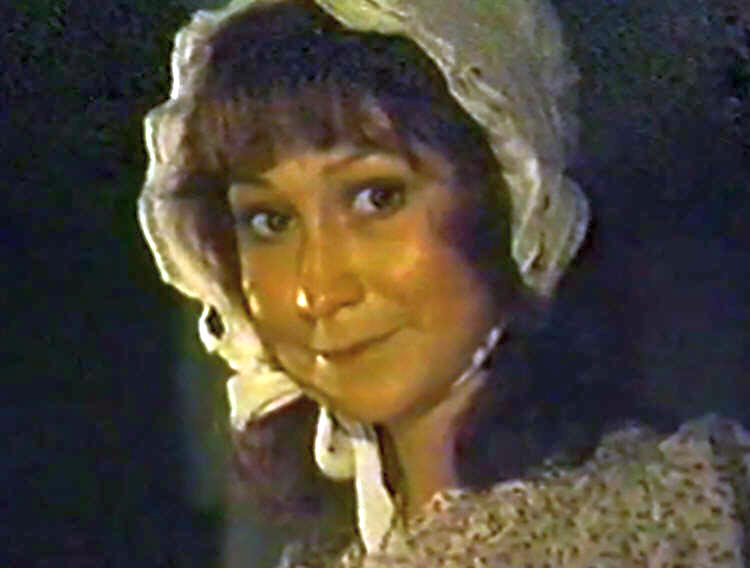
David Warner plays William Wordsworth and Felicity Kendal his sister Dorothy.
Lighting Cameraman is Russell regular Dick Bush, Costume Designer is by
Ken's then wife Shirley Russell. The script is by Melvyn Bragg and
Ken Russell.
In Phillips´ book Ken says "Clouds is the first film I have done for
twenty years in which there are virtually no tracking shots. Yet the film
does not look static...I have discovered that there is something to be
said for this sort of simplicity".
The music includes
-
The Sea, Frank Bridge
-
The Banks of Green
Willow-Idyll For Orchestra, George Butterworth
-
Symphony No. 1, Arnold Bax
-
Symphony No. 2, Arnold Bax
-
Symphony No. 6, Arnold Bax
Script was by Melvyn Bragg and Ken Russell. Cinematography was by
Dick Bush and editing by Anthony Ham. Costume Design was by Shirley Russell.
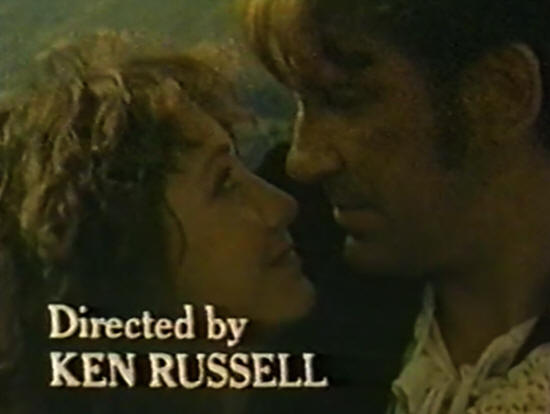
All images from the film (apologies for the poorer quality).
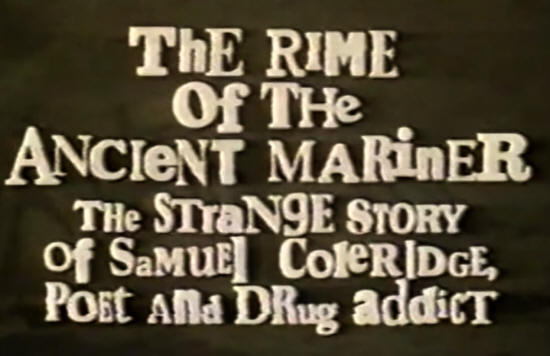
The Rime of the Ancient Mariner- The Strange Story of Samuel Coleridge,
Poet and Drug Addict by Ken Russell from 1978.
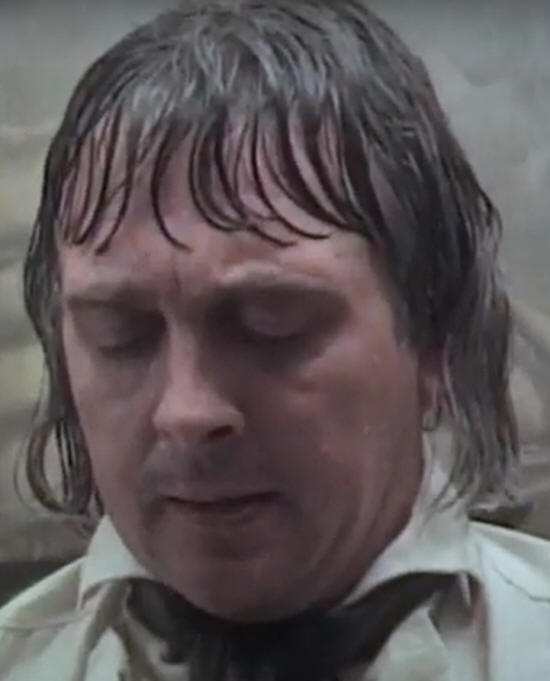
David Hemmings as Coleridge.
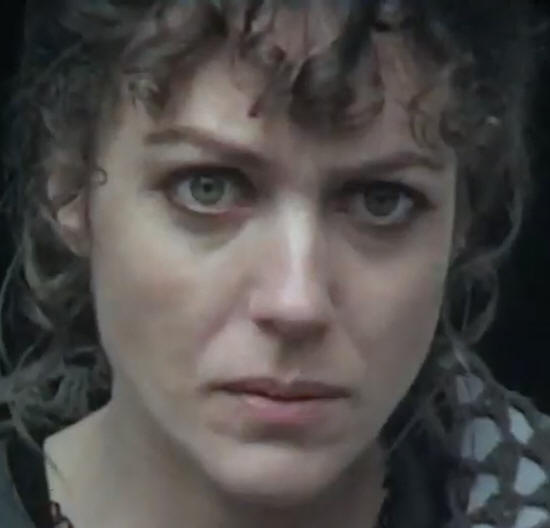
Kika Markham as Coleridge's Sara wife
"Samuel Taylor Coleridge 1772-1834... He had been using
opium since 1708 and was by now addicted to it, but it had not yet wreaked
havoc with life... Coleridge is a unique figure in English poetry and what
little he produced contains great, yet unfinished, pieces... His addiction
to opium should not be judged too harshly. Laudanum (tincture of
opium) was then the only known painkiller and for an unstable temperament
the step from laudanum to opium was tragically easy" (from The Cambridge
Companion to English Literature, Michael Stapleton).
from The Rime of the Ancient Mariner
It is an ancient Mariner,
And he stoppeth one of three.
'By
thy long grey beard and glittering eye,
Now wherefore stopp'st
thou me?
The Bridegroom's doors are opened wide,
And I
am next of kin;
The guests are met, the feast is set:
May'st
hear the merry din.'
He holds him with his skinny hand,
'There was a ship,' quoth he.
'Hold off! unhand me, grey-beard
loon!'
Eftsoons his hand dropt he.
…
'The ship
was cheered, the harbour cleared,
Merrily did we drop
Below
the kirk, below the hill,
Below the lighthouse top.
The
Sun came up upon the left,
Out of the sea came he!
And he
shone bright, and on the right
Went down into the sea.
…
And now the STORM-BLAST came, and she
Was tyrannous and
strong:
She struck with his o'ertaking wings,
And chased us
south along.
With sloping masts and dipping prow,
As who
pursued with yell and blow
Still treads the shadow of his foe,
And forward bends his head,
The ship drove fast, loud roared
the blast,
And southward aye we fled.
And now there came
both mist and snow,
And it grew wondrous cold:
And ice,
mast-high, came floating by,
As green as emerald.
…
The ice was here, the ice was there,
The ice was all
around:
It cracked and growled, and roared and howled,
Like
noises in a swound!
At length did cross an Albatross,
Thorough the fog it came;
As if it had been a Christian soul,
We hailed it in God's name.
Samuel Taylor Coleridge |
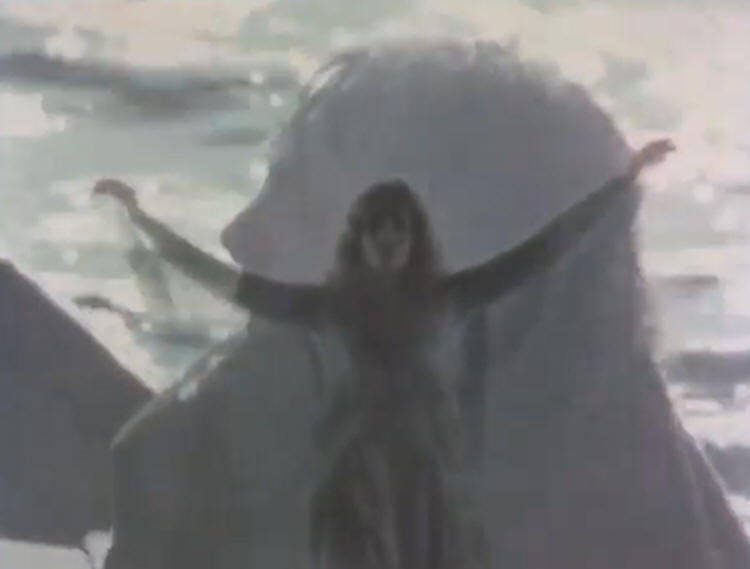
from The Rime of the Ancient Mariner
In mist or cloud,
on mast or shroud,
It perched for vespers nine;
Whiles all
the night, through fog-smoke white,
Glimmered the white
Moon-shine.'
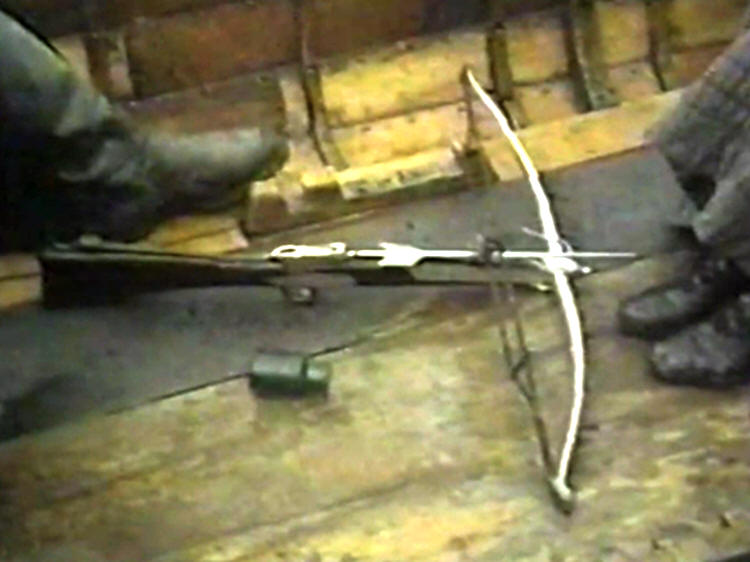
'God save thee, ancient Mariner!
From the
fiends, that plague thee thus!—
Why look'st thou so?'—With my
cross-bow
I shot the ALBATROSS.
Samuel Taylor Coleridge |
from Frost at Midnight
Dear Babe, that sleepest
cradled by my side,
Whose gentle breathings, heard in this deep
calm,
Fill up the intersperséd vacancies
And momentary
pauses of the thought!
My babe so beautiful! it thrills my
heart
With tender gladness, thus to look at thee,
And think
that thou would learn far other lore,
And in far other scenes!
For I was reared
In the great city, pent 'mid cloisters dim,
And saw nought lovely but the sky and stars.
But thou, my babe!
shalt wander like a breeze
By lakes and sandy shores, beneath
the crags
…
Which image in their bulk both lakes and shores
And mountain crags: so shalt thou see and hear
…
Of that
eternal language, which thy God
Utters, who from eternity doth
teach
Himself in all, and all things in himself.
Great
universal Teacher! he shall mould
Thy spirit, and by giving
make it ask.
Samuel Taylor Coleridge |
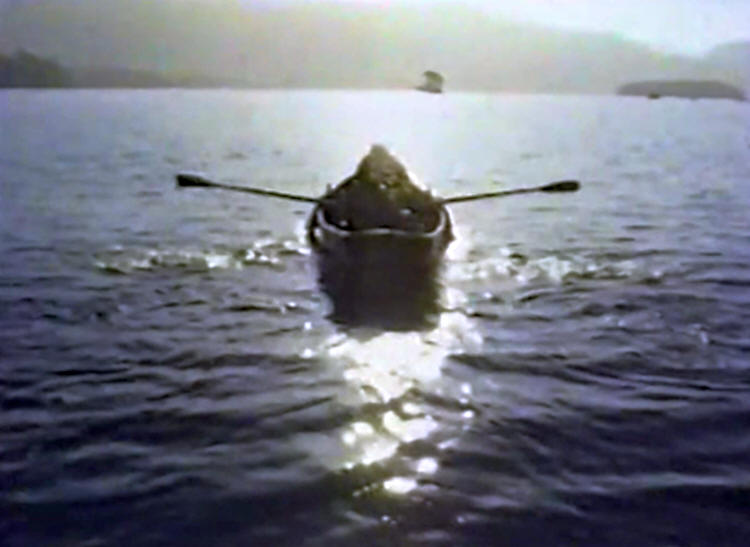
The music includes
-
A Shropshire Lad, Ralph Vaughan Williams
-
Sinfonia Antartica,
second movement scherzo: moderato, Ralph Vaughan Williams
-
Symphony No. 6, second movement moderato,
Ralph Vaughan Williams
-
Symphony No. 5, first movement preludio, Ralph
Vaughan Williams
-
Symphony No. 6, first movement allegro, Ralph Vaughan Williams
Script was by Melvyn Bragg and Ken Russell.
Cinematography was by Dick Bush and editing by Anthony Ham. Costume Design
was by Shirley Russell.
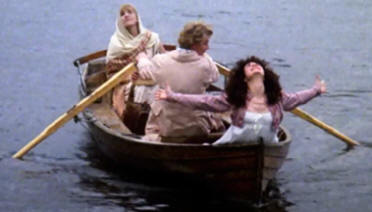
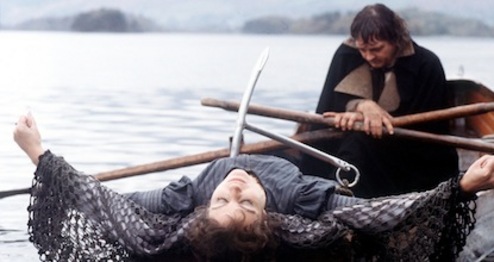
The woman outstreached as a ship's masthead left will be used later
in Gothic from 1986.
All images from the film.
|