|
the classic
period
A
period when Ken Russell brought out films that challenged
cinema. Women in Love was a major critical and commercial
success. The Music Lovers continued his success and The
Devils established him as a great mainstream director. At
one point his last three films (The Music Lovers, The
Devils, The Boyfriend) were showing at the same time on
London's West End.
| 1969 |
Women in Love
|
| |
|
| |
Women in Love established Russell as a major
film director. The film is based on DH Lawrence's novel and caused as
much critical confusion as Lawrence did in his day. But it became a
major commercial success.
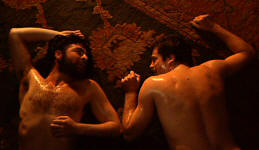
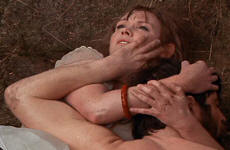
The wrestling scene brought homo-erotic images
into the mainstream cinema.
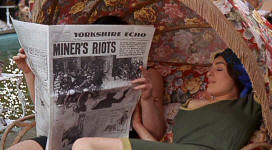
As in the later Rainbow, Russell skips most of
the political aspects of Lawrence's book.
|
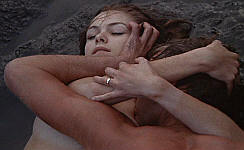
 |
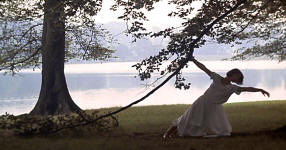
Drowned lovers contrasted with the living. |
 |
|
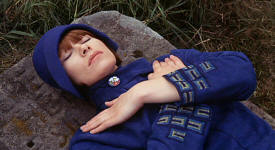
 |
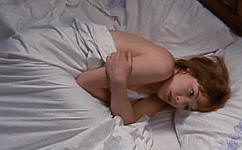
The rest of the virgin and the anxiety of the
mistress. |
 |
|
 |
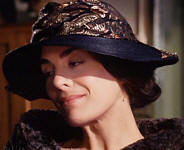
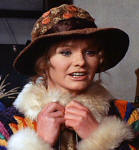
Eleanor Bron and Jennie
Linden provide good supporting roles. |
 |
The photography is by
Billy Williams. Says Joy Gould Boyum (from Double Exposure)
"the scenes between Rupert and Ursula tend to be brightly lit,
situated in daylight and frequently outdoors. The scenes between
Gerald and Gudrun, in contrast, tend to be set in interiors and most
often at night- with the prevailing darkness serving... to comment on
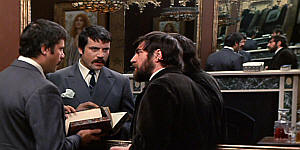
the texture of their relationship....". The use of mirrors
is typical of Ken Russell.
The editor is again Michael Bradsell.
Costumes are by Shirley
Russell. Georges Delerue did the
music, Russell says: "Certainly the power of the scene is greatly
enhanced by the music of Georges Delerue but its
not the exact music that he wrote for that particular
sequence... what I had to do was to cut out the fugue and
use the prelude, actually the prelude had tremendous, a
sort of growing intensity and power so it worked and the
fact that it cut off just as the moment when the two men
collapsed worked extremely well".
|
| people |
|
| best image |
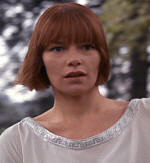
 |
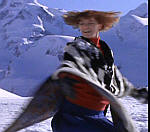
Glenda Jackson, red hair and
fringe, confronting the Highland cows, red hair and fringe. |
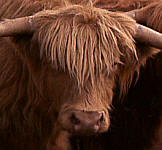
 |
Alan Bates naked in the field.
|
| best scene
|
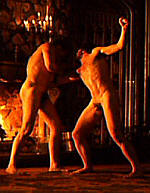
The wrestling scene.
The opening sequence with the
coal miners on the bus and the silent dialogue of Glenda
Jackson.
|
| themes |
sexuality (repression,
homosexuality) the
elements: water and earth.
|
| films |
Other films released in the same year include True Grit,
Midnight Cowboy and Easy Rider. |
| 1971 |
The
Music Lovers
|
| |
Ken Russell's famous quote
"If I hadn't told United Artists it was a film
about a homosexual who fell in love with a nymphomaniac
it might never have been financed".

Not simply a biography of Tchaikovsky, but also looking at the people
around Tchaikovsky, the music lovers though few of whom love the music. Tchaikovsky
cannot handle the contradictions in his life and
turns his haunted thoughts into music. The music
lovers drag Tchaikovsky down to their own fantasies.

The film is packed with images and
excitement, the life story providing a
common link. Music, gay forbidden love, a mother
dying of cholera, a sponsor who never wants to
meet Tchaikovsky and who suddenly ended the
sponsorship, critical failure and death by
cholera, just like his mother.
The working titles were The Lonely Heart (from a
Tchaikovsky song None but a Lonely Heart) and Opus 74 (the number of
the symphony Pathétique). I saw the film when it came out in
Edinburgh. I saw it on Wednesday and before it
had moved on (Saturday) I had seen it another
three times. My introduction to Ken Russell.
 |
| people |
Richard
Chamberlain and Glenda Jackson star. Kenneth Colley as
Modeste Tchaikovsky, Max Adrian as Rubinstein and Isabella Telezynska as
Madame von Meck are excellent. Childrens´ roles are
played by Russell's family. Costumes are by Shirley
Russell.
The screenplay is by
Melvyn Bragg. Bragg later became an arts presenter and
sponsored a number of Russell documentaries. Photography is by
Douglas Slocombe (who later worked in the Raider of the
Lost Ark films) and the editor is Michael Bradsell.
The film cost £1.6M.
|
| best image |
Glenda Jackson in the mental asylum being fondled
and abused by the prisoners: "I have lots of lovers".
 |
| best scene
|
The
cholera scene with the mother dying is harrowing (and is
similar to the play Marat/Sade in which Glenda Jackson
acted). The 1812
Overture scene bursts with kitsch joy.
The premiere of the
first piano concerto and the critical backlash. The scene
benefits from Chamberlain actually playing the piano,
rather than requiring cutting from long shot to hands.
Although he plays in the visuals, the music is dubbed on (the actual
pianist was Rafael Orozco).
Drinking the glass of
water infected with cholera.
Tchaikovsky trying to
commit suicide by drowning but the river is too shallow.
|
| themes |
The train
scene with Glenda Jackson is pivotal. It was filmed with
music (Shostakovich's The Execution of Stepan Razin)
played to establish rhythm. The music does not appear in
the film. Tchaikovsky sees her naked body not as sexual
but as rotting flesh. The unconsummated marriage, and the relationship
with his sister. Says Russell "the sister was the
ideal woman he could worship, and wouldn't have to have
sexual relations with" from Films and Filming July 1970.
|

|
The dream
sequence of Tchaikovsky conducting to the crowds
and eventually becoming his own statue has
references to Fritz Lang's Metropolis (right). |
 |
|
| films |
Other films released in the same year include A Clockwork
Orange, The French Connection and two more Russell films- The Devils
and The Boyfriend. |
| 1971 |
The
Devils
|
| |
Aldous Huxley's "The
Devils of Loudon" filmed by Russell.
|
 |
About power, corruption and political expediency in
France as
the church (Cardinal Richelieu) and crown (Louis XIII) battle
for power over the city of Loudon, protected by massive walls. |
 |
|
 |
And Father Urbain Grandier in Loudon will fall
victim, a priest who has lovers yet turns out to have
nobility. |
 |
The film confirms Russell's immense talent, and
again the imagery is breathtaking.


Gaudier is tortured and burnt alive just before
the walls of Loudon, and its independence, are destroyed.
Gaudier's wife is lost among the mountains of bricks as she climbs over
the wall to leave the city.

 |
The original version was censored,
the later versions include the short but
harrowing torture scene.
The
power of Russell's imagery was so powerful that
many critics complained of scenes which they
thought were in the film, but were not, rather
they were implied.
|
 |
When on a television programme
with Russell, critic Alexander Walker called the film
"monstrously indecent". Russell famously hit
him over the head with a rolled up newspaper.
|
| people |
Oliver
Reed in another subtle performance as Grandier, possibly
his best role.

Vanessa Redgrave is
excellent as the prioress who loves Grandier from a
distance. Her frustration causes her to denounce
Grandier. Glenda Jackson turned the role down because
parts were too similar to the madhouse scenes in The
Music Lovers. Just as Jackson previously, Redgrave was
pregnant during the filming, eventually having a
miscarriage.
Most actors were chosen
by Russell based on their physical appearance.
Peter Maxwell Davis
provides the music. Derek Jarman provided the sets,
massive brick constructions. The photography is by David
Watkin, the editor is Michael Bradsell, costumes are by
Shirley Russell.
The torture of Reed was censored in the original
versions, but is included in later versions (it lasts seconds).
The rape of Christ scene was censored by the studio. A restored
version with the full sequence, was shown at the National Film Theatre
on 23 Nov 2004.

The films
was based directly on Huxley's novel, and on John
Whiting´s stage play of the novel. The premiere of the
play, 10 years before the film, included Max Adrian as
Father Barre and Dorothy Tutin as Sister Jeanne, both in this film,
though in different roles.
British comedian Spike Milligan was a candidate
for a part in the film (information from Spike by Norma Farnes).
Russell's early documentary Portrait of a Goon was about Milligan.
|
| best image |
Vanessa
Redgrave´s entrance, head bowed under a low arch.
 |
| best scene
|
The girl
confessing a love affair to Reed, and by a slip of the
tongue giving away that it is Reed she loves. The girls dancing in
devilish ecstasy until the vessel with the relic of the
blood of Christ subdues them. Then it is revealed the
vessel is empty, there is no blood.

The holocaust imagery of bodies in the plague pit resemble
the bodies in the bath (Billion Dollar Brain) and the plastic models
being burnt in French Dressing.
|
| themes |
Lots of nuns.
Unconsummated love (the prioress)
and forbidden love (Grandier and lovers, and the
homosexuality of the audience in the opening sequence
watching the king in drag).

Christ imagery as the prioress dreams of Grandier as Christ walking on
water.

The enormous walls of Loudon
have the same splendour as the walls in Metropolis.
|
| films |
Other films released in the same year include A Clockwork
Orange, The French Connection and two more Russell films- The Music
Lovers and The Boyfriend. |
|